
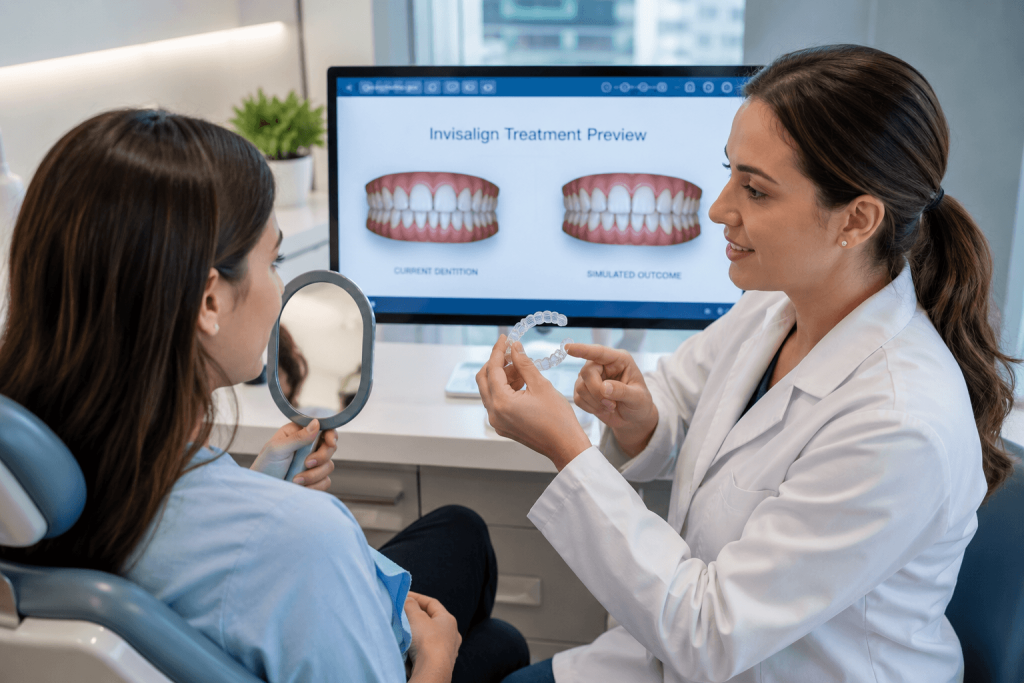
If you’re thinking about straightening your teeth with Invisalign, your consultation is the perfect opportunity to gather information before making any decisions. While your dentist will explain how treatment works, asking thoughtful questions can help you better understand your options and feel more confident about the next steps.
This appointment isn’t about committing to treatment. Instead, it’s an opportunity to discuss your smile goals, learn whether Invisalign may be appropriate for your needs, and understand what treatment could involve. Every patient has different concerns, so preparing a few questions in advance can make the conversation more productive.
If you’re consideringInvisalign treatment in Downtown Toronto, knowing what to ask during your consultation can help you leave with a clearer understanding of your personalized treatment plan.
What Should You Expect to Learn During an Invisalign Consultation?
An Invisalign consultation is designed to evaluate your smile and provide information based on your individual needs.
During the appointment, your dentist may discuss:
- Your smile goals.
- Your current oral health.
- Whether Invisalign could be an appropriate option.
- Possible treatment alternatives if needed.
- The overall treatment process.
- Questions or concerns you have about wearing aligners.
Rather than following the exact same discussion for every patient, the consultation is personalized. Some people are mainly interested in improving the appearance of their smile, while others have concerns about bite alignment or spacing between teeth.
If you’d like a broader overview of the appointment itself, you can also reviewwhat to expect during your first Invisalign visit before your consultation.
Am I a Good Candidate for Invisalign?
One of the most common questions patients ask is whether Invisalign is suitable for their smile.
The answer depends on several individual factors. During your consultation, your dentist will assess your teeth and discuss whether clear aligners may be appropriate based on your specific needs.
Helpful questions to ask include:
- Is Invisalign likely to address my concerns?
- Are there other treatment options I should consider?
- Are there any factors that could affect treatment planning?
- What results may realistically be possible in my situation?
Keep in mind that not every orthodontic concern is treated in exactly the same way. Your dentist’s recommendations will depend on your examination rather than general information found online.
Being honest about your goals is equally important. Whether you’re hoping to correct mild crowding, spacing, or another alignment concern, explaining what you’d like to improve helps your dentist recommend the most appropriate approach.
What Records, Photos or Digital Scans Will You Need?
Another useful topic to discuss is how your treatment plan will be developed.
Depending on your individual needs, your consultation may involve gathering information such as:
- Digital scans of your teeth.
- Dental photographs.
- X-rays if appropriate.
- A review of your bite.
- An assessment of your overall oral health.
These records allow your dentist to better understand your current smile before discussing treatment options.
If digital scans are recommended, you might consider asking:
- What information do the scans provide?
- Will they help plan my treatment?
- Will additional records be needed later?
- How are these records used throughout treatment?
Understanding why these records are collected can make the process feel much more straightforward.
What Will My Invisalign Treatment Plan Include?
Every Invisalign treatment plan is customized, which is why this part of the consultation often generates the most questions.
Rather than focusing only on how long treatment may last, ask about the overall plan.
Some helpful questions include:
- What are the main goals of my treatment?
- How often will I receive new aligners?
- How frequently are follow-up appointments usually scheduled?
- What responsibilities will I have during treatment?
- How important is wearing my aligners as instructed?
Your dentist may also explain what daily life with Invisalign typically involves, including removing aligners before eating and maintaining good oral hygiene throughout treatment.
Having a clear understanding of the overall plan often makes patients feel more prepared before beginning treatment.
How Long Might Invisalign Treatment Take?
It’s natural to want an estimate of how long treatment could take, but this is one area where it’s important to remember that every smile is different.
Treatment time depends on several factors, including the complexity of your alignment concerns, your personalized treatment plan, and how consistently the aligners are worn according to your dentist’s instructions.
During your consultation, consider asking questions such as:
- What factors could influence my treatment timeline?
- How will my progress be monitored?
- What happens if I don’t wear my aligners as instructed?
- Will my treatment plan change if my teeth don’t move as expected?
Rather than expecting one timeline to apply to everyone, your consultation should provide a personalized discussion based on your specific orthodontic needs.
Will I Need Attachments or Refinements?
Many patients aren’t familiar with Invisalign attachments or refinements until they begin researching treatment.
Attachments are small tooth-coloured shapes that may be placed on certain teeth to help guide specific movements. Not every patient requires them, and the number used depends entirely on the treatment plan.
You may want to ask:
- Will my treatment likely require attachments?
- What purpose would they serve?
- Will they be noticeable?
- How are they removed once treatment is complete?
It’s also helpful to ask about refinements. In some situations, additional aligners may be recommended after the initial series has been completed to help achieve the planned tooth movements. Whether refinements are needed depends on your individual treatment and how your teeth respond.
Understanding these possibilities ahead of time can help you feel more prepared without assuming they’ll be necessary for your case.
What Should I Ask About Invisalign Cost and Payment?
Many patients also have questions about the financial side of treatment. While your consultation is an appropriate time to discuss costs, it’s important to understand that pricing varies depending on individual treatment needs.
Some practical questions include:
- What factors influence the overall cost of treatment?
- Will I receive a personalized estimate?
- Are there different treatment options available?
- Does my dental insurance provide any orthodontic coverage?
- What payment options are available?
Since treatment plans vary from one patient to another, your dentist can provide information that’s specific to your situation after completing the assessment.
What Happens After the Invisalign Consultation?
At the end of your consultation, you’ll usually have a much clearer understanding of your options and the recommended next steps.
Depending on your individual situation, your dentist may recommend:
- Moving forward with treatment planning.
- Gathering additional diagnostic records.
- Monitoring your smile before making a decision.
- Discussing alternative treatment options if appropriate.
There is no obligation to begin treatment immediately. The consultation is intended to provide the information you need to make an informed decision based on your own goals and oral health.
If additional questions come to mind after your visit, reviewing the clinic’sInvisalign frequently asked questions can also provide helpful information before your next appointment.
Invisalign Consultation FAQs
What happens during an Invisalign consultation?
An Invisalign consultation generally includes a discussion about your smile goals, an assessment of your oral health, and a conversation about whether clear aligners may be appropriate for your needs. Depending on your situation, your dentist may also recommend photographs, digital scans, or other records to help with treatment planning.
How should I prepare for an Invisalign consultation?
It’s helpful to think about what you’d like to improve with your smile and write down any questions you have before your appointment. Bringing information about your dental history or previous orthodontic treatment may also be useful if applicable.
Will I receive a digital scan during the consultation?
Some consultations may include digital scans, while others may recommend them later as part of treatment planning. Whether scans are needed depends on your individual situation and your dentist’s recommendations.
How soon can treatment start after an Invisalign consultation?
The timing varies from patient to patient. Your dentist can explain the next steps after evaluating your oral health and discussing your treatment plan. It’s best not to assume the same timeline applies to everyone.
Is an Invisalign consultation free?
Consultation fees and promotional offers can vary between dental practices. If you have questions about consultation costs, it’s best to ask the clinic directly when scheduling your appointment.
Book an Invisalign Consultation in Downtown Toronto
Preparing a few thoughtful questions before your appointment can help you make the most of your Invisalign consultation. By understanding your treatment options, asking about your personalized plan, and discussing any concerns you have, you’ll be better equipped to decide whether Invisalign is the right choice for your smile.
If you’re ready tobook an Invisalign consultation, the team at City Dental on Bay can assess your smile, answer your questions, and explain the treatment options that may be appropriate for your individual needs. If you’d like more information before scheduling, you can alsocontact City Dental on Bay to speak with the team.
Whether you’re exploring Invisalign for the first time or comparing your orthodontic options, a consultation provides the opportunity to receive personalized guidance based on your oral health and smile goals rather than general information alone.