
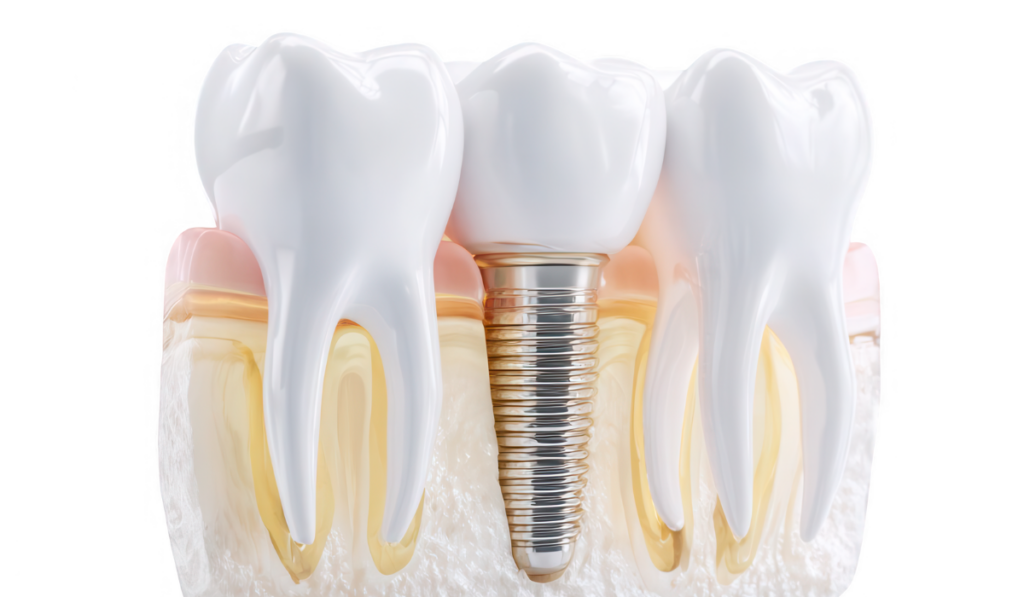
Dental implants represent the gold standard for replacing missing teeth in modern dentistry. Many patients feel uncertain about what the process involves and how long it takes. Understanding the dental implants journey from initial consultation to final restoration helps patients prepare mentally and physically. This comprehensive process ensures optimal results and long-term success for tooth replacement.
Comprehensive Evaluation for Dental Implants
The dental implants process begins with a thorough evaluation to determine candidacy. This assessment examines multiple factors that influence implant success and treatment planning.
Initial evaluation components include:
- Complete medical and dental history review
- Comprehensive oral examination of teeth and gums
- Bone density assessment using advanced imaging
- 3D cone beam CT scans for precise planning
- Evaluation of bite relationship and jaw alignment
- Discussion of patient goals and expectations
Bone density assessment is crucial for dental implants success. The jawbone must have sufficient volume and density to support the implant fixture. Advanced imaging technology allows dentists to measure bone quality in three dimensions.
3D cone beam CT scans provide detailed views of bone structure and anatomy. These scans reveal the exact location of nerves, sinuses, and blood vessels. This information helps plan dental implants placement with precision and safety.
Patients with insufficient bone may require bone grafting procedures before dental implants placement. These grafting procedures add volume and density to support the implant. The evaluation phase identifies these needs early in the treatment planning process.
Surgical Placement Timeline for Dental Implants
The surgical phase involves placing the titanium implant fixture into the jawbone. This procedure is typically performed under local anesthesia in a dental office setting.
Surgical placement steps include:
- Administration of local anesthesia for patient comfort
- Creation of precise opening in the jawbone
- Placement of titanium implant fixture at planned depth and angle
- Attachment of healing abutment or protective cover
- Suturing of gum tissue around the implant site
- Post-operative instructions and medication prescriptions
The dental implants surgery typically takes 1 to 2 hours per implant. Multiple implants can often be placed during a single surgical appointment. Most patients experience minimal discomfort during the procedure due to effective anesthesia.
Recovery from dental implants surgery usually involves mild swelling and discomfort for several days. Patients can manage symptoms with prescribed medications and cold compresses. Most people return to normal activities within 24 to 48 hours.
Healing Phases Between Implant and Crown Placement
Osseointegration is the biological process where bone fuses with the dental implants surface. This integration phase is critical for long-term implant stability and success.
Healing timeline for dental implants:
- Initial soft tissue healing: 1 to 2 weeks
- Osseointegration in lower jaw: 3 to 4 months
- Osseointegration in upper jaw: 4 to 6 months
- Abutment placement appointment: After osseointegration completes
- Crown fabrication period: 2 to 3 weeks
- Final crown placement: Total process of 4 to 7 months
The upper jaw typically requires longer healing time than the lower jaw. This is because upper jaw bone is generally less dense. The dental implants must achieve solid integration before receiving the final restoration.
During the healing phase, patients may wear temporary teeth for aesthetics. These temporaries maintain appearance and function while dental implants integrate. They are designed not to put pressure on the healing implant sites.
Abutment placement occurs after osseointegration is confirmed. The abutment is a connector piece that attaches to the dental implants fixture. It provides the foundation for the final crown restoration.
Quality Control Measures for Dental Implants Success
Ensuring proper integration and long-term success requires careful monitoring throughout treatment. Quality control measures verify that dental implants are healing correctly at each stage.
Quality control procedures include:
- Regular follow-up appointments to monitor healing
- Stability testing before proceeding to restoration phase
- Digital impressions for precise crown fabrication
- Bite adjustment to ensure proper occlusion
- X-ray verification of bone integration
- Professional cleaning and maintenance protocols
Stability testing confirms that dental implants have achieved sufficient osseointegration. Dentists use specialized instruments to measure implant stability objectively. Only implants meeting stability criteria proceed to the restoration phase.
Digital impressions capture the exact position and angle of dental implants. This precision ensures that crowns fit perfectly and function naturally. Modern technology eliminates the need for messy traditional impression materials.
Bite adjustment ensures that dental implants crowns align properly with opposing teeth. Proper occlusion prevents excessive force on the implant and surrounding teeth. This adjustment protects the investment and promotes long-term success.
Final Restoration and Crown Placement
The final phase involves attaching the custom-made crown to the dental implants abutment. This restoration completes the tooth replacement process and restores full function.
Final restoration steps include:
- Verification of crown fit and appearance
- Color matching to surrounding natural teeth
- Secure attachment to the abutment
- Final bite adjustments for comfort
- Instructions for care and maintenance
- Schedule for follow-up appointments
The crown is custom-designed to match natural teeth in size, shape, and color. Modern dental ceramics provide strength and aesthetics that rival natural tooth enamel. The result is a restoration that looks and functions like a natural tooth.
Long-Term Success and Maintenance
Proper care ensures dental implants can last a lifetime with appropriate maintenance. Regular dental visits and good oral hygiene are essential for long-term success.
Maintenance requirements include:
- Daily brushing and flossing around dental implants
- Regular professional cleanings every 6 months
- Annual X-rays to monitor bone levels
- Prompt attention to any concerns or changes
Expert Dental Implants Care at City Dental on Bay
For patients seeking expert tooth replacement solutions, City Dental on Bay offers comprehensive dental implants services in downtown Toronto. Located at 1006 Bay Street, the practice combines advanced technology with experienced care. The skilled dental implants team at City Dental on Bay guides patients through every step of the process. From initial consultation to final restoration, patients receive personalized attention and expert treatment. To schedule your dental implants consultation, call City Dental on Bay at 647-957-2500 or email bay@citydentaltoronto.com. Discover how dental implants can restore your smile and confidence with lasting results.